← Back to Functional & Filler

Functional Masterbatch

Anti-Static M/B

Antistatic masterbatch helps reduce the buildup of static electricity on plastic product surfaces.

TypeFunctional MasterbatchGrade selectionAST / ES
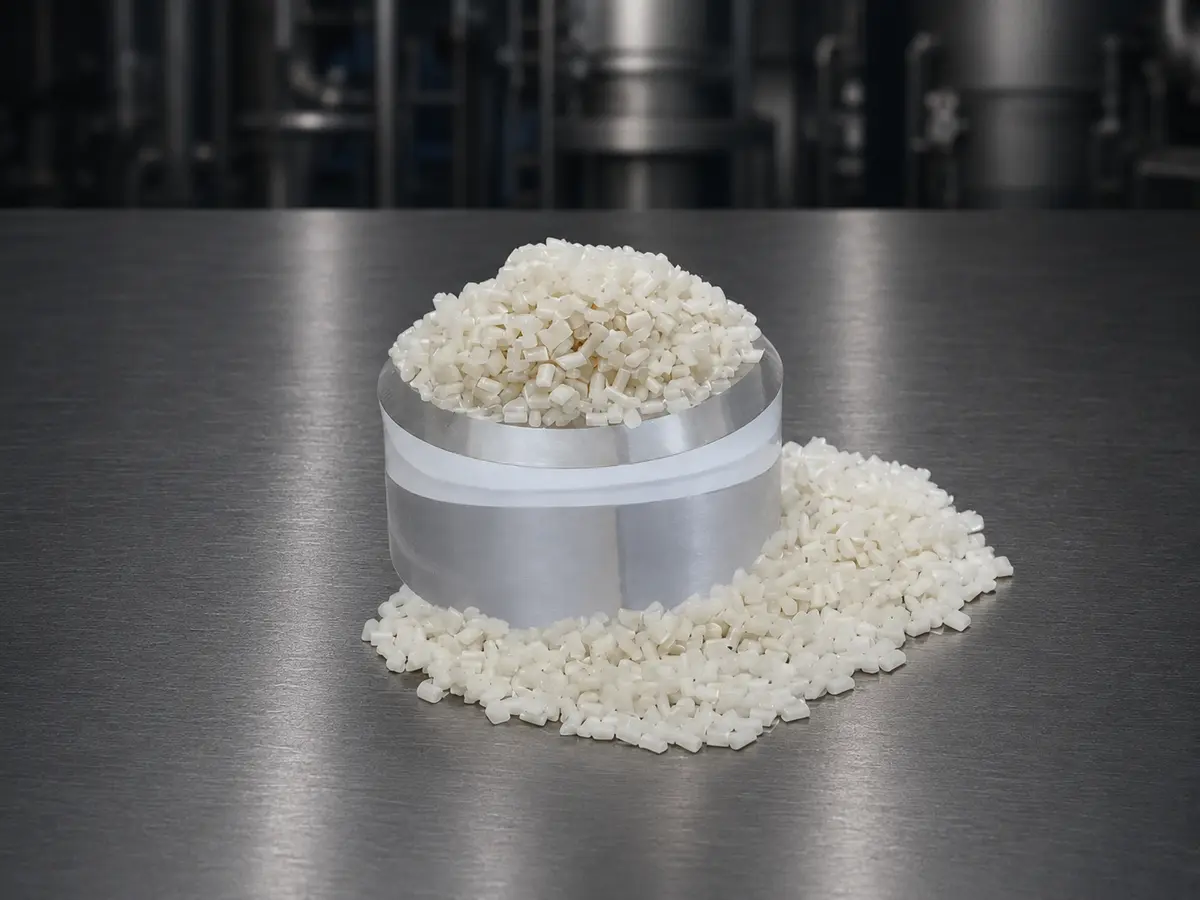
Samjin Masterbatch Anti Static #310 pellets on an industrial silver background

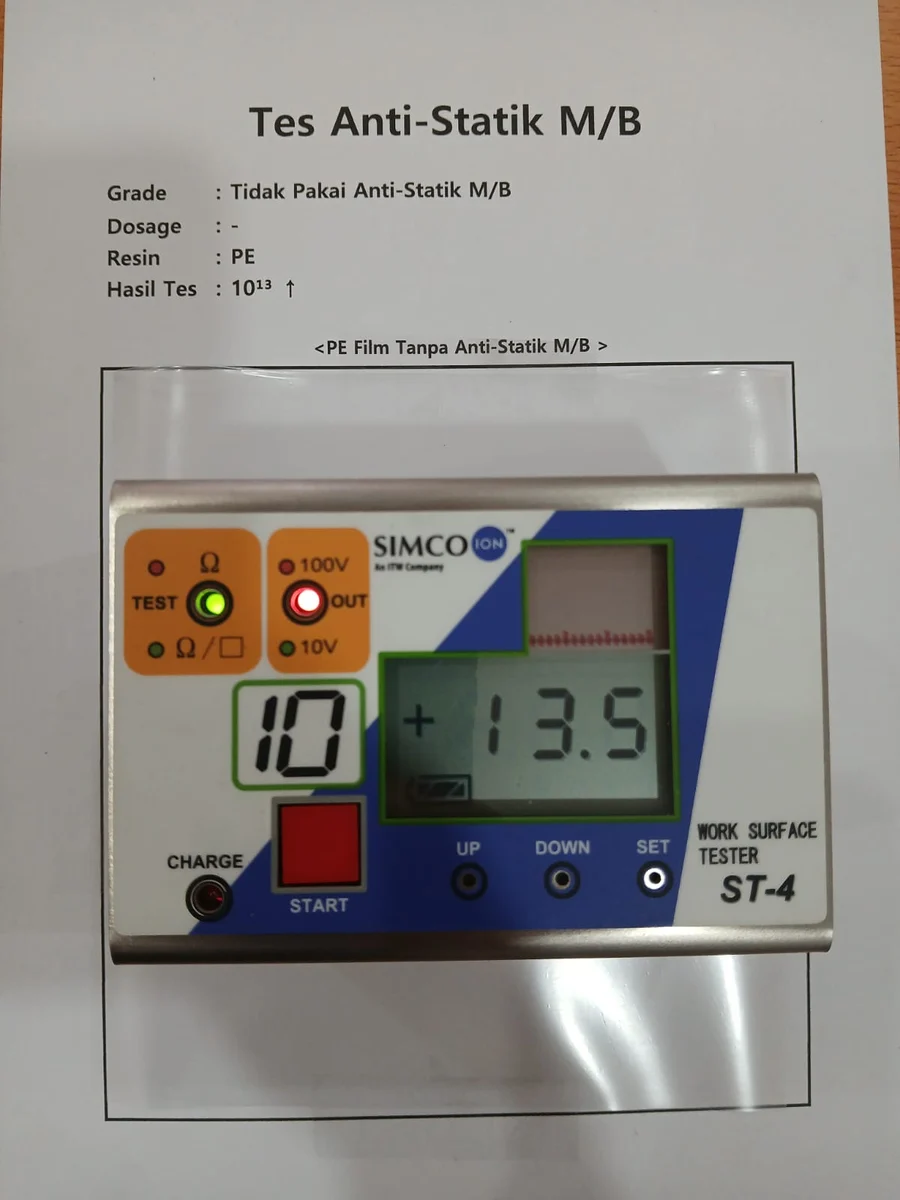
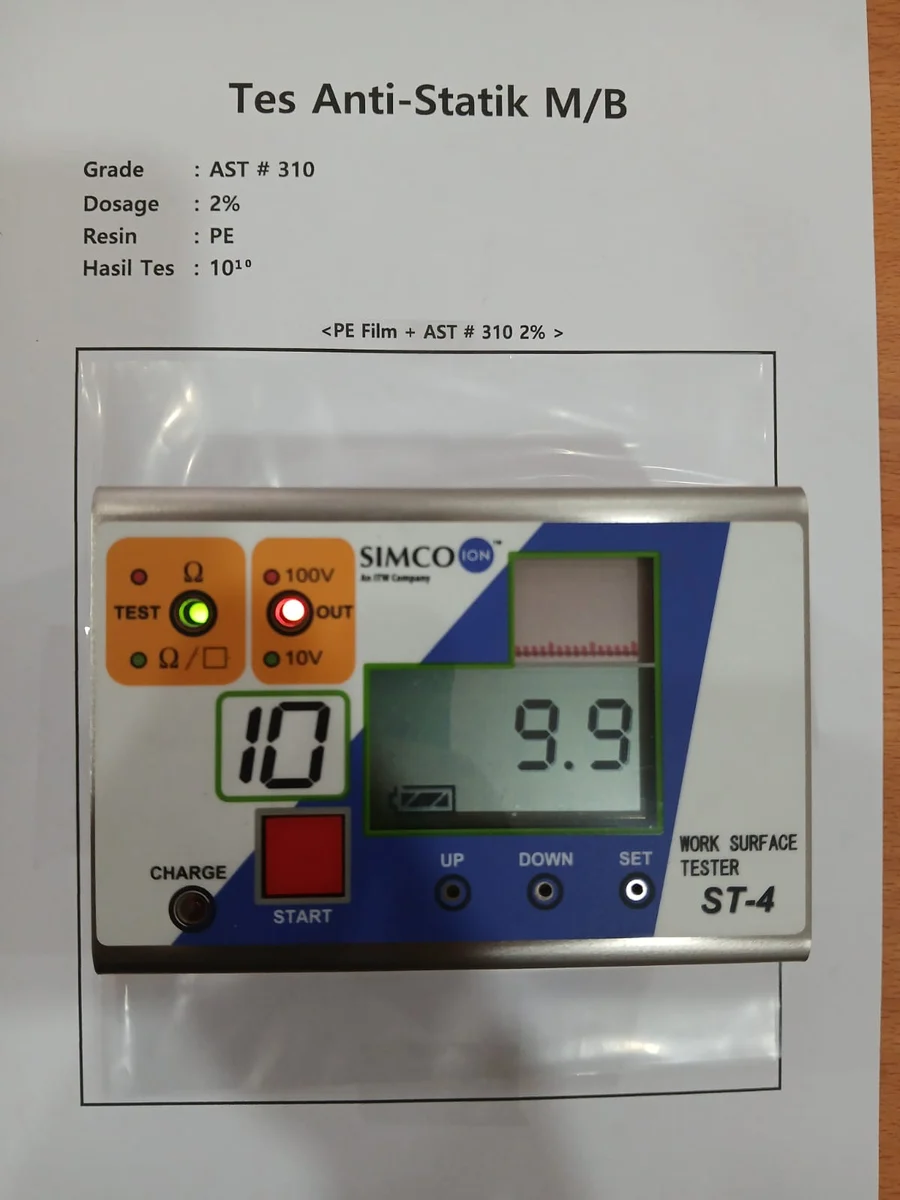
PE Film Test Comparison

Test photo of PE film without antistatic masterbatch
Before
Test photo of PE film with AST #310 at 2% dosage
After

Sample documentation: PE film without antistatic compared with PE film using Anti-Static Masterbatch

Antistatic M/B

Plastic is generally an electrical insulator. Friction can generate static electricity that accumulates on its surface. Excessive charge may cause electric shocks, fires or explosions under certain conditions. Antistatic M/B is used in plastic production to help reduce risks associated with static charge buildup.

1. Brief Introduction

Static electricity is generated through triboelectrification: charge transfer caused by contact and friction. Because plastics are insulating, charge can remain on the surface and be released through electrical discharge or conduction. Charge control is needed when excessive accumulation occurs.

2. Problems Caused by Static Electricity

On plastic films, static electricity can cause blocking, where film layers cling together and become difficult to open. Dust and fine powder attracted to the surface can reduce film quality. When packing dusty products such as flour or coffee, contamination in the seal area can also impair sealing quality.

Friction during production can generate static electricity on plastic containers. Dust may then stain the surface, interfere with ink printing and enter food containers, reducing packaging hygiene. Under certain conditions, static discharge can also become an ignition source.

3. Functions of Antistatic Masterbatch

Antistatic masterbatch helps address these problems. Grade selection and dosage should account for additive migration to the plastic surface and the following potential side effects.

  • A sticky surface and reduced film opening performance.
  • Reduced sealing performance when used excessively.
  • Reduced ink adhesion during printing.
  • Possible yellowing of white products during prolonged storage, for example 6 months.

4. Evaluation of Electrification

Evaluation can use two mechanical measurement methods—voltage (V) and resistance (Ω)—and a simple sensory test.

  1. Voltage method: the supplied reference lists a range of 10,000–15,000 V where sparks may occur, and around 100–500 V to help reduce static-related problems. These are technical reference values, not universal safety limits.

  2. Resistance method: the reference lists general plastic resistance above 10¹⁴ Ω and approximately 10¹⁰–10¹¹ Ω after antistatic masterbatch is used. Actual results must be confirmed by testing the selected formulation and process conditions.

  3. Sensory test: after plastic is rubbed against fabric and brought near fine dust or cigarette ash, an untreated surface tends to attract more particles. An antistatic-treated surface may attract fewer particles or none.

5. Features of Antistatic Masterbatch

  1. The antistatic agent migrates to the surface over time and supports antistatic performance by absorbing moisture from the air. Measurement is recommended 3–5 days after production.

  2. Reference measurement conditions are 23°C and 50% relative humidity. Performance is affected by humidity and may vary with environmental and seasonal conditions.

6. Grade per Resin & Use

Select the grade and dosage through consultation and trials for your production needs.

Anti-Static M/B grade selection
ItemGradeResinDosage (%)FeaturesUses
ES330LD/LLDPE5Good antistatic performance at high temperatureCasting films
ES312LD/LLDPE2–2.5Heavy-duty film (fertilizer bag)Non-slip
ES316LD/LLDPE2–2.5Non-slip, good openingShrinkage Films
ES317-5LD/LLDPE2–4Less sticky antistaticLD/LLDPE packaging
ES311HDPE5–7HDPE films, good antistaticHDPE films
ES330-SHDPE, PP5–7For both HDPE and PPHDPE and PP blow molding
ES317PP5–7PP productsPP
ES390PS10–15PS injection molding and sheetPS
ES395ABS10–15ABSABS
ESN304LD/LLDPE4–5For both LD and LLDPENon-migration

Trial before mass production

Confirm compatibility with your resin and process.

For a more accurate recommendation, prepare the resin type, production process, thickness, target color or function, use conditions, and estimated monthly requirement.

  1. 1
    Send requirements

    Resin, process, application, target, and sample reference.

  2. 2
    Technical evaluation

    The team identifies the item and initial trial guide.

  3. 3
    Sample testing

    Results are tested under the customer’s actual process conditions.

  4. 4
    Production confirmation

    Formula and requirements are confirmed before repeat orders.

Technical Consultation

Need an Anti-Static M/B Grade Recommendation?

Discuss the application, trial dosage, sample requirement, or compatibility with your resin.

WhatsApp Consultation